Fit a Cole Park visit between stops around Knox Street
The public park offers a break from the shops and traffic in a part of Dallas developed around short blocks.
In this article
Fit a Cole Park visit between stops around Knox Street
Cole Park gives people who are already out around Knox Street, Uptown or the north end of McKinney Avenue a place to slow down. The seven-acre Dallas park has a short neighborhood trail, a playground, benches, a pavilion and courts. A visitor can stop for a few minutes or use the path as the first part of a longer walk. The choice depends on which street you are coming from, what your group wants to do and where you need to be when you leave. Give the park an exact place in your itinerary, even if you are only going to stay long enough to sit for a few minutes.
Start with the park address and your next stop
The Dallas Parks facility page identifies the park as 4000 Cole. The neighborhood trails directory lists Cole Park Trail at 4000 McKinney and gives its length as 0.52 mile. Both point to the same park area near parallel roads. Give the Cole address to anyone using the main park listing, and use the city’s map and actual street approach to name where you will meet. A short visit will feel less rushed if you begin from the side that works for your next stop.
Look at both trips on the map. If the park is the first stop, put the address into your directions and walk toward the exit that will take you on to the next place. If the park comes after a meal or a store visit, count the street crossings and the time in the park as part of the same outing. Blocks that are close together can still require waiting at a crossing, and one person may want longer to move through traffic than the others. Find the public crossing you will actually use, keep to the sidewalk and give yourself enough time to turn back instead of cutting across a street after the group has already spread out.
If you are meeting someone, pick one recognizable spot where the party can pause without standing in an entrance or on the path. That might be a visible landmark by the courts or a place near the pavilion. Someone who wants a short walk and someone who wants to sit can start at the same point. Agree when they will meet again. The person who is taking a break should have a place to sit that works for them independently of what the faster walkers decide to do.
Use part of the neighborhood trail for a short visit
The city’s trail length suggests a small circuit in the context of the wider Dallas network. A full 0.52 mile can fit some visits. A slower group or one expecting to cross the street again can walk a shorter section and turn at an obvious landmark. Keep the return on a route you can recognize as easily from the other direction. If you have only a short window, a few minutes of walking followed by a stop near a bench can be the complete outing. A half-mile figure on a trail list gives little information about how long it will take your group to approach the park, spend time at a stopping place and reach the next address.
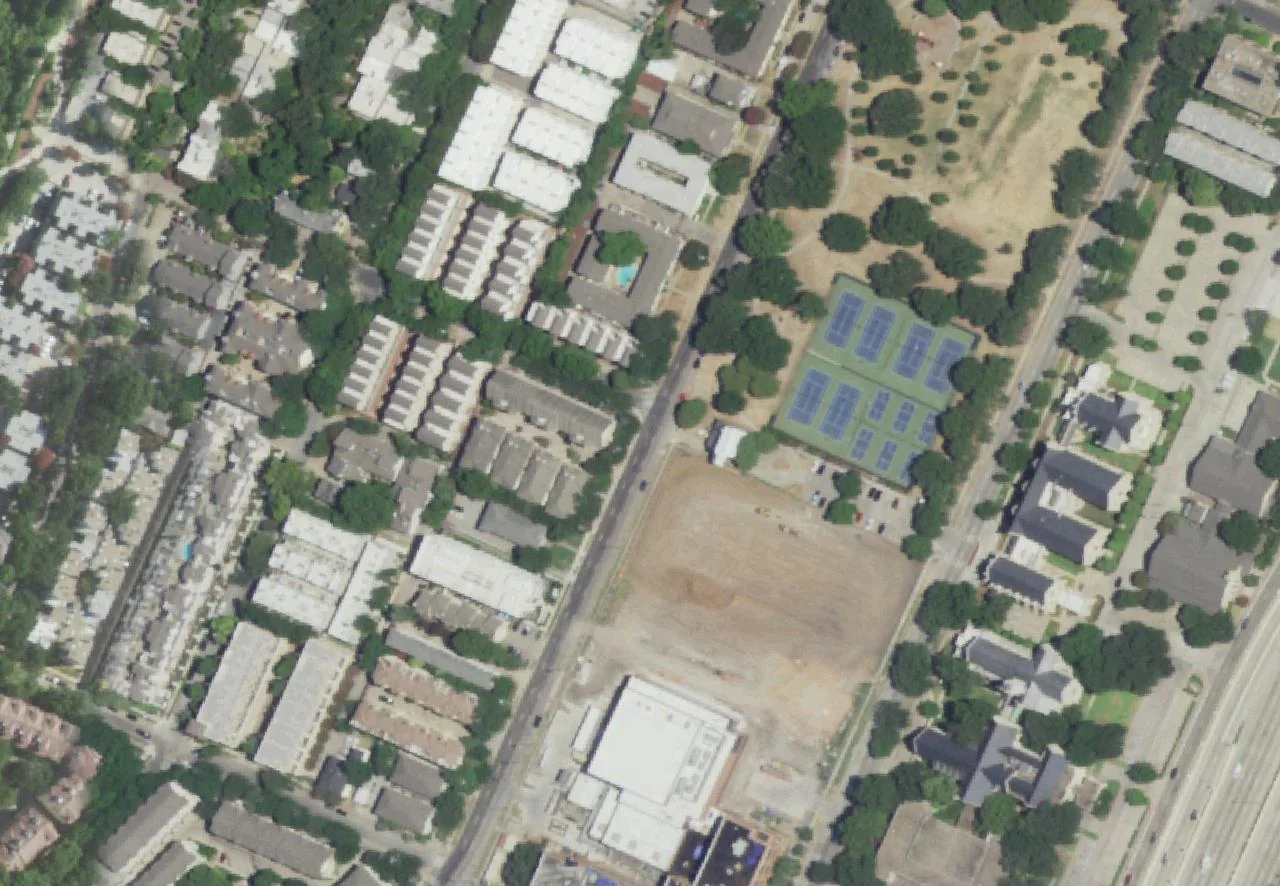
For a first walk, look for the variety of the park’s edges. An open stretch toward the courts can feel busier than a place under the trees. The aerial view shows how close the park is to surrounding blocks. On the ground, use the people and traffic you can see to decide where to pause. If a bench is occupied or a group is already meeting at the pavilion, choose another place along the path before deciding whether to walk farther. Walking beside a group for a few minutes is different from filling the trail while everyone stops. Step into an open area with room to let other park users pass.
If you are keeping pace with a child, agree on a point ahead where they can check in with an adult. A child who wants another lap can use a route they have just seen with someone who is able to stay. Somebody returning to a car can take the nearer exit when their outing is over. When the visit includes a stroller or a mobility device, check transitions at the street and the path instead of estimating from a satellite view. The trail listing tells you the length of the neighborhood route. The approach, surface and waiting places determine how the walk works for a particular person.
Choose a court visit or a playground stop
The park’s facility listing identifies an outdoor basketball court, playground, tennis and pickleball. The city pickleball page specifies six pickleball courts at Cole. The Dallas tennis directory also lists Cole within its service area. A group headed for one of those sports should check current access rules and whether the space it wants is in use. A person joining only to watch can use a separate meeting detail, such as the public approach to the courts. A visit planned around a game still needs a way to adjust if another group is already using the space.
For a playground stop, the first important decision can be where an adult will be able to see the children. Use the public approach and identify where everybody will meet before leaving. A nearby walker may want to do a piece of the path while another adult stays with the children. Name a point at which you can see one another and a time when the walkers will be back. If the playground is the main reason for the visit, leave enough time there for the children to settle in. It may be easier to make the walk a separate outing than to hurry everyone away from the first activity.
Dallas lists benches, a drinking fountain and a pet waste station among the park features. They are useful references when somebody needs a break or is bringing a pet. Check what is available where you arrive, and bring what you need for the short outing. When a group is moving from a busy sidewalk into open parkland, let the people at the back come through before choosing an onward direction. Then step off the shared path if you need to make a call, look at directions or wait for a companion.
Consider a transit approach and leave time to reach it
The McKinney Avenue Transit Authority’s M-Line route and schedule and live stop list provide options closer to the park area, including the listed stops at McKinney and Blackburn and at Cole and West Village. Check the route and the direction of service when choosing which stop to use. For a visitor combining a short walk with a trolley ride, allow for the street approach between the stop and the park and an extra interval to wait or transfer. The operator’s route information provides links to live tracking. Use the marked stop and check current accessibility information with the operator if a vehicle or boarding arrangement matters to your trip.
The street plan also makes it possible to come on foot from another nearby destination. Before you start, save the park’s location and the name of the place you are going to afterward. Walk the most straightforward public route for everyone in the group. If you are carrying shopping bags or walking with a child new to the area, take time at each crossing instead of assuming the same pace as a round of the park. On the return, a direction you recognize can be as useful as a shorter distance. It lets one person take the lead while another stays with somebody who wants a slower approach.
Use the park’s history as a reason for another look
The city dates Cole Park to 1923 and includes it among places associated with the City Beautiful Movement in the parks comprehensive plan appendix. The city parks inventory identifies a historic shelter among its features. That history gives a visitor a reason to look beyond the first amenity they came to use. Notice the position of the shelter, the way paths connect different uses and how the park relates to the dense blocks around it. A second walk can begin from another public entrance and reveal a different relationship among those features.
Dallas Parks’ department history says the city had 32 parks in 1923, the year it dates Cole Park. An easy way to explore that history on a visit is to pick one use that fit into a neighborhood park then and still takes place today. A shaded place to sit and paths through the block can show how an urban park serves people even between scheduled activities. Compare the public edges with a park you know in another part of Dallas and notice where each one opens to the street.
For a short stop right now, decide how long the group has and choose one activity that can fit inside it. Give people a starting landmark and a clear route to leave. Ten minutes by a bench, a single stretch of trail or time to try a court can be enough for a visit. If you return with more time, keep the same starting point and explore what you passed. The Knox Henderson News archive has other places to include in a walk through this part of Dallas.
Sources
- Dallas Parks facility pagedallasparks.org
- neighborhood trails directorydallasparks.org
- city pickleball pagedallasparks.org
- Dallas tennis directorydallasparks.org
- M-Line route and schedulemata.org
- live stop listmata.org
- parks comprehensive plan appendixdallasparks.org
- city parks inventorydallasparks.org
- department historydallasparks.org